

When I first heard about beginner friendly insurance trust basics for low income households, I honestly laughed. Trusts felt like something for people with vacation homes and stock portfolios, not someone like me stretching a paycheck to Friday. But after my dad passed and his small life insurance payout got tangled in probate for months, I learned the hard way that trusts aren’t just for the wealthy. They’re protection, plain and simple. And setting one up cost me way less than I expected.
Why Insurance Trusts Actually Matter When Money Is Tight
Here’s what nobody tells you: the less money you have, the more every single dollar matters. A life insurance payout going directly to a beneficiary sounds simple enough. But without a trust, that money can get counted as an asset for Medicaid eligibility, SSI benefits, or other assistance programs your family depends on. I watched my aunt lose her housing voucher because she received a $15,000 life insurance check after her husband died. Fifteen thousand dollars. That’s not generational wealth. That’s barely enough to cover a year of rent in most cities.
An irrevocable life insurance trust, often called an ILIT, holds your life insurance policy outside of your estate. When you pass away, the trust owns the policy and distributes the death benefit according to your instructions. Your family receives the money without it being counted as part of your estate. That means no probate delays, potential estate tax savings (which matters more than you’d think even at lower asset levels), and most critically, it can protect your family’s eligibility for means-tested government benefits.
The distinction matters enormously. Without the trust, a $25,000 term life policy payout could disqualify a surviving spouse from Medicaid for months. With the trust, that same money flows through a structure that protects it.

Understanding the Beginner Friendly Insurance Trust Basics for Low Income Households
Let me strip away the legal language because that’s what tripped me up for the longest time. A trust is basically a container. You create the container, you put something in it (in this case, a life insurance policy), and you write rules about who gets what’s inside and when. Three roles exist in every trust, and they’re simple once you see them laid out.
The grantor is you, the person creating the trust. The trustee is the person or company you pick to manage it after you’re gone. The beneficiaries are the people who receive the money. That’s it. That’s the entire framework.
For low income households specifically, the most common setup involves a small term life insurance policy placed inside an irrevocable trust. Term life is cheap. A healthy 35-year-old can get a $50,000 policy for $15 to $25 a month through companies like Bestow or Ladder. The trust itself costs money to set up, but I’ll get into affordable options below. What matters right now is understanding that this isn’t complicated. It feels complicated because lawyers and financial advisors use language designed to make you feel like you need them for everything.
Step 1: Figure Out If You Actually Need a Trust or Just a Beneficiary Designation
Not everyone needs a trust. I want to be honest about that because I hate when financial content pushes products on people who don’t need them. If your situation is straightforward, meaning you have one beneficiary who is a competent adult with no government benefits at risk, a simple beneficiary designation on your life insurance policy might be perfectly fine. The money goes directly to them. No probate. No trust needed.
You probably need a trust if any of these apply:
- Your beneficiary receives SSI, Medicaid, SNAP, or Section 8 housing assistance
- You want to control how the money gets spent (especially if minors are involved)
- You have a blended family and want to split things specifically
- Your estate, including life insurance death benefits, might exceed your state’s estate tax threshold
When my dad died, he had two policies totaling $40,000. My mom was on Medicaid. That $40,000 knocked her off Medicaid for almost a year. She had to spend down the money before she qualified again. A trust would have prevented that entirely. That experience is what pushed me to finally set one up for my own family.
Step 2: Choose the Right Type of Trust for Your Situation
Two main types show up when you start researching, and they work very differently.
A revocable trust lets you change the terms whenever you want. You keep control. The downside? Because you keep control, the assets inside still count as yours for tax and benefits purposes. For low income households trying to protect government benefit eligibility, a revocable trust usually doesn’t solve the core problem.
An irrevocable trust is the one that does the heavy lifting. Once you set it up and transfer the policy into it, you give up ownership. You can’t change it easily. That sounds scary, but that’s exactly what makes it work. Because you don’t own the policy anymore, the death benefit doesn’t count as part of your estate. It doesn’t affect your beneficiary’s eligibility for assistance programs.
There’s also a specific variation called a special needs trust that works beautifully if your beneficiary has a disability and receives government benefits. This one has extra protections built in. I helped my neighbor set one up for her adult son who receives SSI, and it gave her real peace of mind knowing his benefits wouldn’t get disrupted.

Step 3: Find an Affordable Way to Set It Up
This is where most low income families hit a wall. Traditional estate planning attorneys charge $1,500 to $3,000 or more to draft a trust. That’s a month’s rent for many families. I get it. But cheaper options exist, and some of them are genuinely good.
Legal aid organizations in many states offer free or low-cost estate planning services. The National Legal Aid & Referral list at LawHelp.org is a solid starting point. I found my local legal aid office through there and got a consultation for free.
Online platforms like Trust & Will offer trust packages starting around $599. That’s still real money, but it’s a fraction of traditional attorney fees. LegalZoom has similar options, though I found their trust templates less customizable. If you go the online route, make sure you pick a platform that lets you specify the trust as irrevocable and that handles life insurance policy assignments specifically.
Some employers also offer legal benefit plans through companies like MetLife Legal Plans or ARAG. If your job includes this perk, trust creation is often covered at no extra cost. I literally set mine up through my employer’s legal plan and paid zero dollars out of pocket. Check your benefits portal because this is the kind of thing that hides in the fine print.
Law school clinics are another underrated option. Many law schools run supervised clinics where students draft legal documents under attorney oversight, either free or at very low cost. Call the law schools near you and ask if they have an estate planning clinic.
Step 4: Transfer the Policy Into the Trust Correctly
This step trips people up more than any other, and getting it wrong can undo everything. Once your trust document exists, you need to contact your life insurance company and formally transfer ownership of the policy to the trust. The trust becomes the owner and the beneficiary of the policy.
You’ll fill out a change of ownership form and a change of beneficiary form from your insurance provider. The owner line should read something like “John Smith Irrevocable Life Insurance Trust dated [date].” The beneficiary of the policy becomes the trust itself. Then within the trust document, you specify who actually gets the money and how.
One thing that caught me off guard: there’s a three-year lookback rule with the IRS. If you transfer an existing policy into an irrevocable trust and die within three years, the IRS treats the death benefit as if it were still in your estate. The workaround is having the trust purchase a new policy from the start, rather than transferring an existing one. My attorney flagged this for me, and it changed my entire approach. I had the trust buy a new term policy through Haven Life instead of transferring my old one.
Also, you’ll need to pay premiums through the trust properly. The trustee typically sends what’s called a “Crummey letter” to beneficiaries each time a gift is made to the trust to cover premiums. This sounds complicated, but it’s basically a notification letter, and most templates are available online for free.
Step 5: Keep It Updated and Tell Your Family
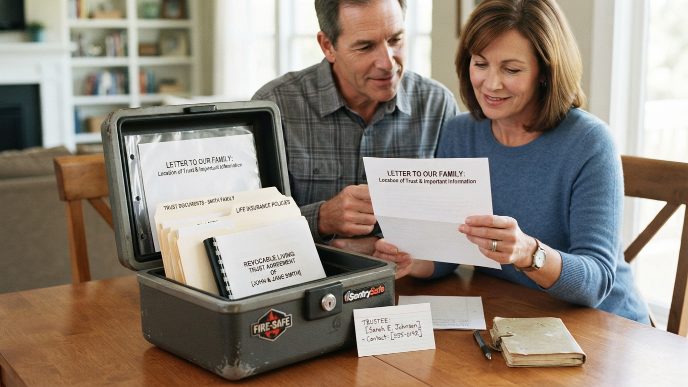
A trust sitting in a drawer that nobody knows about is almost as useless as not having one at all. I keep a copy of my trust documents in a fireproof lockbox at home and another copy with my trustee. My wife knows exactly where everything is, who the trustee is, and what steps to take.
Review your trust every two to three years or whenever something major changes, like a divorce, a new child, or a beneficiary going on or off government assistance. With an irrevocable trust, you can’t just edit it casually, but you can work with an attorney to modify certain provisions through something called a trust decanting or by using built-in trust protector powers if your document includes them.
Write a simple one-page letter to your family explaining what the trust is, where the documents are, and who to contact. I typed mine up on a regular piece of paper and stuck it inside the lockbox. No legal language, just plain English. “This is what happens with the life insurance money. Call this person. Here’s the file.” That letter might be the most important document in the whole setup.
Common Mistakes Low Income Families Make With Insurance Trusts
I’ve seen a few patterns after helping friends and family members through this process. The biggest mistake is naming themselves as trustee of an irrevocable trust. You can’t be the trustee. That defeats the purpose because it implies you still control the assets. Pick a trusted family member, a friend, or a professional trustee.
Another common error is forgetting to actually fund the trust. Creating the trust document is step one. Transferring the policy into it is step two. I’ve met people who did step one, stuck the paperwork in a folder, and never completed step two. Their trust was essentially an empty container when they passed.
People also underestimate how affordable term life insurance really is. Companies like Ethos, Bestow, and Ladder have made it possible to get coverage with no medical exam for relatively low monthly costs. If the premium barrier has kept you from even considering a trust, it’s worth getting a quote just to see the actual numbers. You might be surprised.

Frequently Asked Questions
Can low income families really afford to set up an insurance trust?
Yes, and that’s what surprised me most. Between legal aid organizations, law school clinics, employer legal benefit plans, and online platforms like Trust & Will starting around $599, the cost is genuinely accessible. Combined with cheap term life insurance at $15 to $25 per month, the total investment is manageable for most budgets when spread over time.
Will an insurance trust affect my eligibility for government benefits?
An irrevocable life insurance trust is specifically designed to keep the death benefit outside your estate. Because the trust owns the policy and not you, the proceeds generally won’t count against means-tested programs like Medicaid, SSI, or Section 8. A revocable trust won’t provide this same protection, so the type matters.
What are the beginner friendly insurance trust basics I should know first?
Start with three things: understand the three roles (grantor, trustee, beneficiary), know the difference between revocable and irrevocable trusts, and figure out whether your beneficiaries receive government assistance. Those three pieces of knowledge shape every decision that follows. Everything else builds on that foundation.
How is an insurance trust different from just naming a beneficiary?
Naming a beneficiary sends the money directly to that person as a lump sum. A trust lets you control the timing, amount, and conditions of the payout. It also protects the money from creditors, divorce proceedings, and government benefit disqualification. For straightforward situations, a beneficiary works fine, but trusts handle complexity much better.
Do I need a lawyer or can I set up a trust myself?
You can use online platforms for simpler trusts, but I’d strongly recommend at least one consultation with an attorney, especially for irrevocable trusts. The transfer process and tax implications (like the three-year lookback rule) involve details that are easy to get wrong. Legal aid and law school clinics make professional guidance affordable.
What happens if my trustee can’t serve when the time comes?
Your trust document should name a successor trustee, a backup person who steps in if your primary trustee dies, becomes incapacitated, or simply can’t fulfill the role. Always name at least one successor. Some people also include a trust protector who can appoint a new trustee if needed.
Conclusion
Setting up an insurance trust on a tight budget felt impossible until I actually started doing it. The tools, resources, and affordable insurance options that exist right now make this genuinely reachable for families who need the protection the most. Have you looked into whether your family’s benefits could be at risk from a life insurance payout?