Slick commercials with catchy mascots tell you nothing about whether a company can pay claims during a major regional disaster. Trust starts with cold, hard cash reserves. Independent rating agencies evaluate the fiscal health of insurers every single year so you do not have to guess.
Before looking at prices, search for the company on the AM Best database. You want to see an A- rating or higher, which signifies excellent financial security. Standard and Poor’s or Demotech also provide reliable scores. If an insurer lacks a rating from at least one of these major bureaus, walk away immediately. A low monthly premium means nothing if the company goes insolvent right when a hurricane or multi-car accident occurs.
Check the NAIC Complaint Index Instead of Online Star Reviews
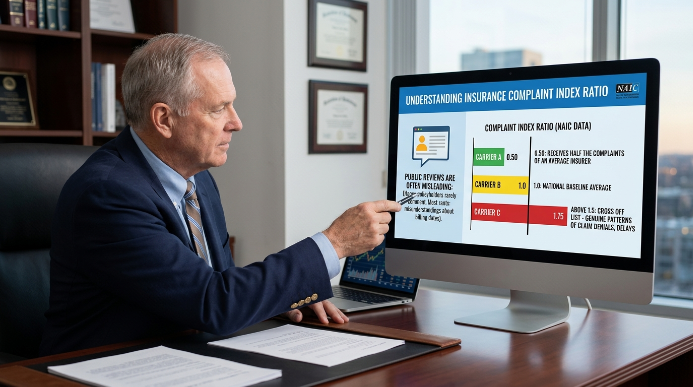
Public review sites are notoriously misleading because satisfied policyholders rarely leave comments. Most online rants stem from misunderstandings about standard billing dates rather than true corporate misconduct. You need an objective, standardized metric to measure customer satisfaction accurately.
The National Association of Insurance Commissioners (NAIC) tracks consumer complaints filed against every licensed insurer and compares that volume to the company’s overall market share. This calculation produces a complaint index ratio where 1.0 represents the national baseline average. A score of 0.50 means the company receives half the complaints of an average insurer of its size. If a carrier scores above 1.50, cross them off your list. That number proves real policyholders experience genuine patterns of claim denials, delays, or unfair practices.
Test Customer Support Before You Buy a Policy
Testing a company’s responsiveness while they are trying to earn your business reveals everything about their internal culture. If their sales or inquiry lines keep you on hold for forty minutes today, imagine what your experience will look like when you file an emergency claim at midnight.
Pick up your phone on a Tuesday afternoon and call the support line. Ask a specific, slightly technical question about coverage limits or deductible structures. Pay close attention to how quickly a real human answers and whether they provide a clear answer without transferring you three times. Top-tier carriers invest heavily in first-contact resolution capabilities. If the representative sounds uninformed or aggressive, treat that interaction as a warning sign and take your business elsewhere.
A No-Fail Insurance Trust Guide for Indecisive Shoppers Comparing Policy Exclusions
Policy documents are deliberately lengthy, but following this no-fail insurance trust guide for indecisive shoppers means skipping the glossy sales pitch and demanding the exclusions page. Insurance contracts give coverage in broad strokes on page one, then quietly take it away through specific clauses buried on page twenty.
Look specifically for water backup limits, windstorm deductibles, and cyber fraud gaps. In auto policies, look for step-down provisions that drop your liability coverage to state minimums if a friend borrows your car. High-trust insurers list their limitations clearly in plain language rather than hiding them under confusing legal jargon. When an insurer explains their named perils exclusions openly during the quoting process, you know you are dealing with an honest outfit.

Calculate Real Out-of-Pocket Risk Over Monthly Premiums
Cheaper monthly premiums often function as psychological traps for indecisive buyers trying to save a quick dollar. Opting for a fifteen-hundred-dollar deductible to save twelve dollars a month is a bad trade if an unexpected expense would drain your bank account.
Look at your liquid cash reserves right now. Your deductible should never exceed the cash balance you can comfortably access within twenty-four hours. High-deductible plans work well for people with deep emergency funds, but they create constant anxiety for everyone else. Evaluate your total out-of-pocket exposure across a full calendar year. Paying an extra twenty dollars per month for a lower deductible buys immediate mental peace and guarantees you can actually afford to use your insurance when trouble strikes.
Weigh Independent Brokers Against Direct Captive Agents
Deciding where to buy your policy often causes just as much hesitation as picking the policy itself. Captive agents represent one brand, such as State Farm or Farmers, and cannot offer alternative options if their underwriting rates spike.
Using a no-fail insurance trust guide for indecisive shoppers reminds us that independent agents provide wider market access without corporate bias. Independent brokers work with dozens of carriers simultaneously. They match your specific risk profile to the underwriter offering the best terms without forcing you to re-type your personal information into twelve different quote engines. An independent agent with a fiduciary standard mindset works for you, not the insurance carrier, giving you an honest ally who shops the market on your behalf every renewal cycle.

Set a Strict 24-Hour Policy Rule to Beat Analysis Paralysis
Endless comparison shopping yields diminishing returns after you narrow your selection down to two solid candidates. Sitting on quotes for weeks leaves your family unprotected and exposes you to rate revisions if underwriting tables shift before you bind coverage.
Pick the two highest-scoring carriers from your NAIC and AM Best research, place their declarations side by side, and make your selection within twenty-four hours. Remember that state insurance regulations protect you with a free look period, which grants you ten to thirty days to review the finalized paperwork. If you discover a clause you dislike after reading the official contract, you can cancel the policy for a full refund. Knowing you can reverse your decision takes the pressure off and lets you move forward without second-guessing yourself.
Audit Bundling Discounts to Prevent Sneaky Rate Creep
Insurers heavily market multi-policy discounts to lock customers into long-term accounts. While bundling home and auto coverage often yields an immediate fifteen to twenty percent discount, carriers routinely exploit customer loyalty by gradually raising rates on one of the policies over time.
Applying this no-fail insurance trust guide for indecisive shoppers helps you separate fake marketing discounts from real annual savings. Every two years, request standalone quotes for your home and auto policies from separate specialty carriers. A standalone auto policy with Progressive combined with a separate home policy through a regional mutual insurer can easily cost less than a bloated multi-policy bundle discount from a single national carrier. Never let the convenience of a single monthly bill stop you from checking real market prices.

Frequently Asked Questions
What is the most reliable way to check if an insurance company is trustworthy?
Check their financial rating through AM Best and inspect their complaint index on the National Association of Insurance Commissioners database. These two independent sources give you mathematical proof of whether a carrier pays claims promptly and maintains sufficient capital reserves to survive widespread economic downturns or natural disasters.
Can an indecisive shopper switch insurance policies after buying?
Yes, you can cancel an insurance policy at any point during your term. Most states mandate a statutory free look window of ten to thirty days for full refunds. Even after that initial window closes, carriers will refund your unused prepaid premiums minus a nominal administrative fee.
How does the NAIC complaint index help an indecisive insurance shopper?
The NAIC complaint index measures consumer grievances relative to an insurer’s market size. A score of 1.0 represents the industry average. Anything under 1.0 proves the insurer treats customers fairly, giving an indecisive shopper hard numbers instead of emotionally charged, unreliable online customer reviews.
Is bundling home and auto insurance always the best choice?
Bundling saves money initially, but carriers often increase rates on one policy over time. Compare standalone quotes from competing carriers every two years to ensure your bundled discount is not masking an overpriced auto or property policy. Independent quotes keep your primary insurer completely honest.
Why should an indecisive insurance shopper consult an independent broker?
An independent broker represents multiple insurance carriers rather than working for a single corporate brand. They compare underwriting terms and price structures across the entire market for you, eliminating the endless stress of filling out separate quote forms on dozens of individual corporate websites.
Conclusion
Making an insurance choice does not require endless research or blind faith in slick advertisements. When you verify financial ratings, check state complaint indexes, and understand your exact policy exclusions, you can buy with total peace of mind. Which insurance policy has given you the biggest headache while shopping?